Executive Summary
The best time tracking software for a virtual assistant is the one that provides operational clarity, billing accuracy, or capacity planning without becoming constant surveillance. Tools like Hubstaff, Time Doctor, Clockify, Toggl Track, and Harvest each fit different needs. The VISIBILITY WITHOUT MICROMANAGEMENT principle means time tracking should serve a defined purpose — and for outcome-based roles with mature performance systems, you may not need it at all. This guide compares features, pricing, privacy controls, and best-fit use cases.
Do You Need Time Tracking for a Virtual Assistant?
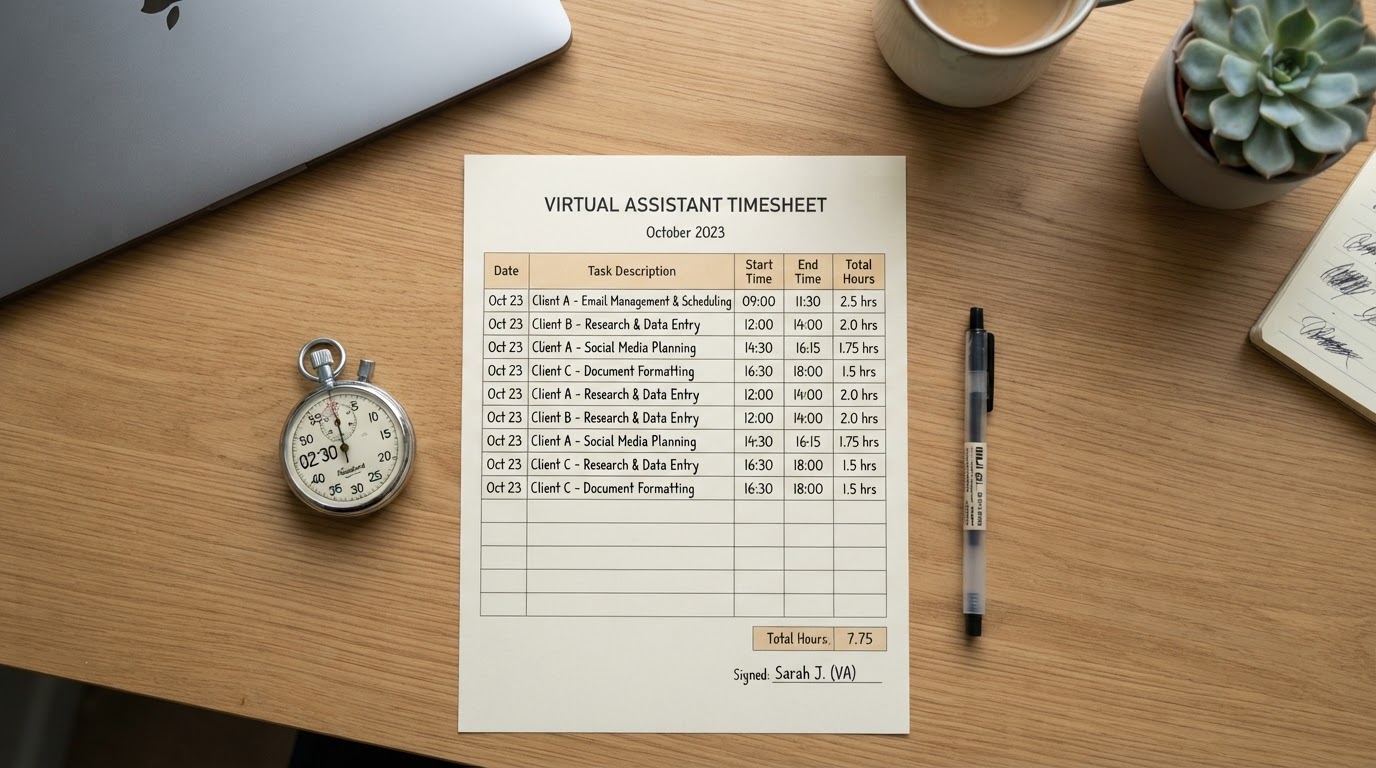
Time tracking makes sense when you need billing accuracy for hourly work, capacity planning across multiple VAs, or visibility during an early trial period. It is less necessary for outcome-based roles where performance is measured by results rather than hours.
For the management philosophy, see our VA management guide and the manage without micromanaging article.
The VISIBILITY WITHOUT MICROMANAGEMENT Principle
The purpose of time tracking should be operational clarity, billing accuracy, or capacity planning — not constant surveillance. Excessive screenshot and activity monitoring can erode trust and signal that outcomes are not being measured. Favor measurable outputs over surveillance inputs.
When You May Not Need Time Tracking
- Outcome-based roles where results matter more than hours.
- Well-defined full-time responsibilities with clear deliverables.
- A mature performance system with KPIs and daily reporting.
For capacity planning, see our VA hours guide and the VA KPIs article.
What to Avoid
- Defaulting to screenshots when outcomes can be measured directly.
- Treating activity levels as a proxy for productivity.
- Using time tracking as a substitute for clear expectations and SOPs.